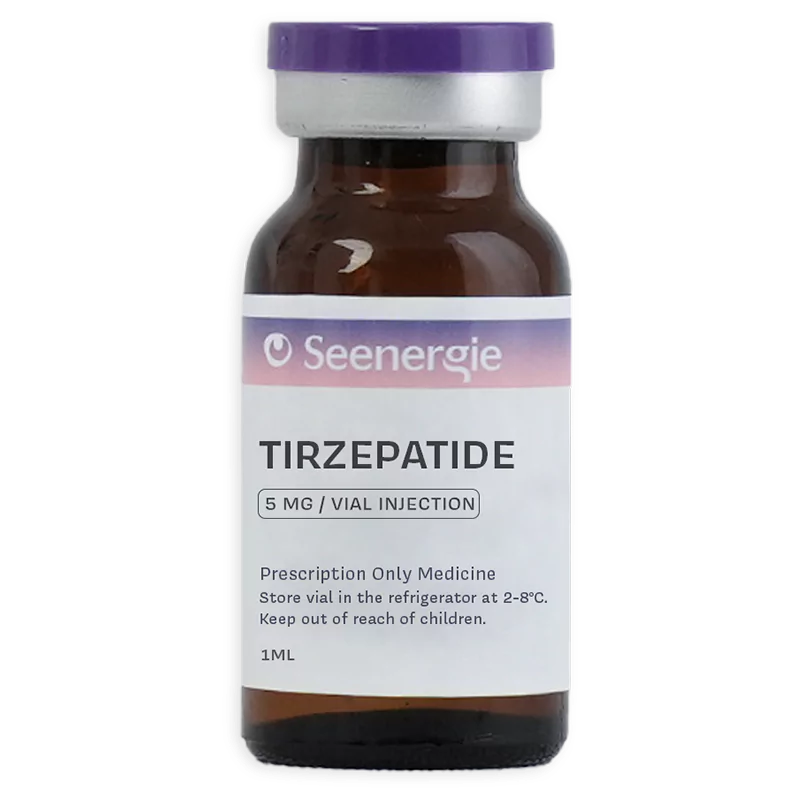
Tirzepatide is a medicine approved by the FDA that you inject under your skin. It’s used to help people with type 2 diabetes manage their condition. Scientists made Tirzepatide by taking a natural substance called GIP and changing it a bit. This altered substance can work on two important parts of the body, GIP and GLP-1 receptors. These parts help control things like blood sugar and body weight. In tests with mice, they found that Tirzepatide could help the mice lose more weight when compared to using just GLP-1 alone.
In studies with people who have type 2 diabetes, Tirzepatide also helped them lose weight, which is a good thing. Now, they’re looking into whether it could be useful for people who want to lose weight but don’t have diabetes. They’re doing a trial called SURMOUNT-1 to check if Tirzepatide is safe and works well for people who are overweight or have obesity.
Benefits
Type 2 Diabetes Management
Potential Obesity Treatment
Weight Loss
Protocols
Content and Potency
Provided as a 5mg and 10mg lyophilized vial
Suggested Dosage
Initiation: Tirzepatide is typically initiated at a low dose to minimize gastrointestinal side effects and titrated gradually to the maintenance dose.
Initial Dose: Start with 1.25 mg subcutaneously once weekly.
Titration: After 4 weeks, increase the dose to 2.5 mg subcutaneously once weekly.
Maintenance: Continue on the 2.5 mg dose for ongoing management of Type 2 Diabetes Mellitus (DM-2) and/or weight loss.
Duration: Tirzepatide is administered once weekly as a long-acting GLP-1 RA.
Weeks 1-4: 1.25 mg of Tirzepatide
Week 5 and onwards: 2.5 mg of Tirzepatide
*The dosage of tirzepatide can vary depending on factors such as the individual’s medical history, current medications, and response to treatment.
Restrictions
History of pancreatitis.
History of severe gastrointestinal disease, including gastroparesis.
Known hypersensitivity to tirzepatide or any component of the formulations.
Not recommended for use in patients with a personal or family history of medullary thyroid carcinoma (MTC) or in patients with Multiple Endocrine Neoplasia syndrome type 2 (MEN2).
Requirements
Monitoring for signs and symptoms of pancreatitis.
Blood pressure and lipid profile checks to assess cardiovascular risk.
Periodic kidney function tests due to the potential risk of kidney problems.
Regular monitoring of blood glucose levels to ensure effective glycemic control.
Procedure
Tirzepatide
Reconstitution
Extract 2 ml of sterile water using a syringe.
Insert the syringe into the peptide vial and inject 2 ml sterile water.
Gently swirl the vial until the solution is fully dissolved.
Administration
Take off the plunger guard and the cap from the tuberculin syringe.
Extract the peptide solution with the tuberculin syringe based on the given dosage.
Clean the injection site with an alcohol swab.
Pinch the sanitized skin and insert the needle at a 90-degree angle.
For next usage
Refrigerate (2-8 °C) the remaining peptide after each use.
Before next usage, clean the vial top with an alcohol swab.
Use a new tuberculin syringe and repeat the administration procedure.
Pinch the sanitized skin and insert the needle at a 90-degree angle.
*Common injection sites include the abdomen, thigh, or upper arm. It’s recommended to rotate the injection site with each dose to reduce the risk of skin irritation.
Clinical Research
Study:
Tirzepatide, a dual GIP/GLP-1 receptor co-agonist for the treatment of type 2 diabetes with unmatched effectiveness regrading glycaemic control and body weight reduction
Source:
National Library of Medicine, Bio Med Central
Results:
The SURPASS-2 trial demonstrated that patients treated with tirzepatide achieved a mean reduction in HbA1c of up to 2.07% from baseline compared to a 1.86% reduction with semaglutide. Additionally, participants experienced significant weight loss, with a mean reduction of up to 12.4 kg at the highest dose (15 mg) of tirzepatide. In terms of body weight, 86.0% of participants achieved at least a 5% reduction, 71.0% achieved a reduction of 10% or more, and 52.0% achieved a reduction of 15% or more.
Tirzepatide is a groundbreaking peptide in many ways, but it was initially developed to help mitigate some of the metabolic challenges facing individuals today.
Efficacy and Safety of Tirzepatide in Adults With Type 2 Diabetes: A Perspective for Primary Care Providers
Type 2 diabetes is a metabolic condition caused by increased insulin resistance and progressive β-cell failure in the pancreas, resulting in decreased insulin secretion and hyperglycemia. Chronic hyperglycemia can ultimately lead to both micro- and macrovascular complications, which can be prevented with appropriate glycemic control.
Trizepatide and semaglutide (found in Ozempic and Wegovy) work in similar ways to help with weight loss. Dr. Mok discusses how these medications work and their benefits and differences. Learn why Trizepatide might be a better option for some people.
Approval of Tirzepatide for Treating Obesity ‘Exciting’
Recently, the FDA approved tirzepatide for the treatment of obesity. It has another funny name, Zepbound, and we’ll all get used to it. It’s very much like tirzepatide for the treatment of type 2 diabetes, meaning it comes in those prefilled syringes at a dose starting at 2.5 mg and then going up to 5 […]
Awesome Human Study Shows 20.9% Weight Loss! (Tirzepatide)
Tirzepatide Once Weekly for the Treatment of Obesity’ is a new paper published in the New England Journal of Medicine (NEJM), with astounding weight loss results
Semaglutide is an injectable glucagon-like peptide-1 Agonist, or short for (GLP-1) agonist that’s administered once a week. It was originally approved in 2017 under the brand name ozempic to control blood sugar in type 2 diabetes.
Tirzepatide: Revolutionary Weight Loss Medication Explained by Dr. Tara Scott | Forum Health
Discover the revolutionary weight loss medication, tirzepatide, explained by Dr. Tara Scott from Forum Health in Akron. Tirzepatide, offered at Forum Health, utilizes GIP and GLP-1 to regulate appetite, control blood sugar, and aid in weight loss.