Unleash Human Potential
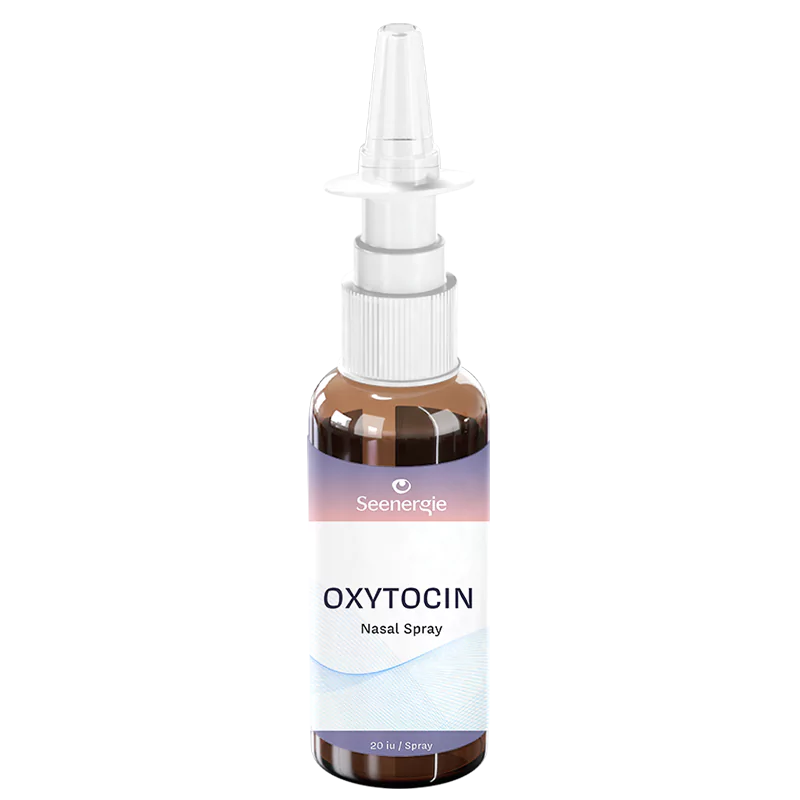

Oxytocin is a hormone that is produced naturally in the hypothalamus and released into the bloodstream via the pituitary gland. It is commonly referred to as the “love hormone” or the “cuddle hormone” because it is released during social bonding activities such as hugging, kissing, and sexual activity. In addition to its role in social bonding, oxytocin has several potential health benefits. Research has shown that oxytocin can help reduce stress and anxiety levels, lower blood pressure, and improve wound healing. It has also been linked to positive effects on digestion and metabolism, as well as increased feelings of trust and empathy. Exogenous administration of oxytocin can improve libido, organism intensity/frequency and overall sexual pleasure for both males and females.
Provided as a 20 iu/spray (0.1 ml) nasal spray
*Provided as a standard protocol, dose may vary depending on the condition of the patient.
*The dosage of Oxytocin may be adjusted based on the individual’s response, medical history, and specific treatment goals.
Oxytocin is a peptide hormone that plays a crucial role in social bonding, sexual reproduction, and childbirth. It has been extensively studied for its therapeutic potential in treating various psychiatric disorders and enhancing social behaviors.
Oxytocin functions by binding to oxytocin receptors in the brain, particularly in regions involved in emotional and social behaviors such as the amygdala and hypothalamus. This binding facilitates the release of neurotransmitters like serotonin and dopamine, which enhance mood and social bonding. Additionally, oxytocin influences the MAP kinase signaling pathway, which is implicated in memory and stress responses.
Clinical studies have demonstrated that oxytocin can improve social interactions and reduce anxiety in individuals with social anxiety disorder and autism spectrum disorder (ASD). For instance, intranasal administration of oxytocin has been shown to enhance social cognition and reduce repetitive behaviors in children with ASD. Oxytocin has been investigated as a potential treatment for depression and anxiety disorders. Research indicates that it can produce antidepressant-like effects by modulating stress responses and enhancing the activity of the hypothalamic-pituitary-adrenal (HPA) axis. This results in reduced anxiety and improved mood. Studies have suggested that oxytocin may help in reducing symptoms of PTSD by enhancing the extinction of fear memories and improving emotional regulation. This makes it a promising adjunct therapy for PTSD patients undergoing cognitive behavioral therapy.
Oxytocin is a reproductive hormone implicated in the process of parturition and widely used during labor. Oxytocin is produced within the supraoptic nucleus and paraventricular nucleus of the hypothalamus and released from the posterior pituitary lobe into the circulation. Oxytocin is released in pulses with increasing frequency and amplitude in the first and second stages […]
Oxytocin is a hormone that’s produced in the hypothalamus and released into the bloodstream by the pituitary gland. Its main function is to facilitate childbirth, which is one of the reasons it is called the “love drug” or “love hormone.” Oxytocin, like endorphins or serotonin, is a type of hormone in your body that promotes […]
For many years, the pituitary hormone oxytocin was viewed as nothing more than a hormone responsible for uterine contraction during vaginal delivery. But oxytocin is proving to be far more than that.
Christopher Cardoso, PhD candidate in Concordia University’s Department of Psychology, discusses a new study that shows that oxytocin can make healthy people “oversensitive” to the emotions of others.
Unleash Human Potential