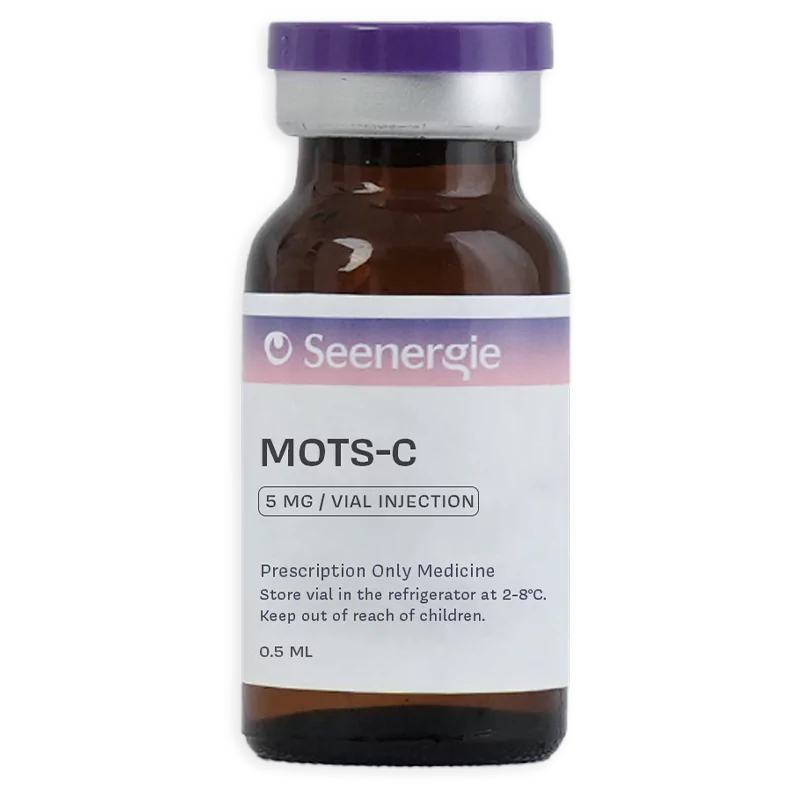
MOTS-C (Mitochondrial Open Reading Frame of the 12S rRNA type-c) is a small peptide that is derived from a mitochondrial protein. It was first discovered in 2015 and is still an area of active research.
MOTS-C is believed to have a variety of functions in the body, including regulating metabolism and mitochondrial function. It is thought to work by activating an enzyme called AMP-activated protein kinase (AMPK), which plays a key role in regulating cellular metabolism and energy homeostasis. Activation of AMPK can lead to increased glucose uptake, fatty acid oxidation, and mitochondrial biogenesis, all of which can improve cellular energy production and overall metabolic function.
MOTS-C has been studied for its potential therapeutic benefits in a variety of conditions, including metabolic disorders, cardiovascular disease, and aging-related conditions. Some studies have shown that administration of MOTS-C can improve insulin sensitivity and glucose metabolism, reduce inflammation, and protect against cellular damage.
Benefits
Better transport of sugars to muscle cells
Greater resistance to metabolic stress
Improved health and lifespan
Decreases insulin resistance
More energy
Fat loss
Protocols
Content and Potency
Provided as a 5mg lyophilized vial
Suggested Dosage
Initiation: MOTS-c therapy is initiated at a standard dose to maximize its metabolic benefits while monitoring for any adverse reactions.
Initial Dose: Begin with 5 mg subcutaneously once weekly for the first four weeks to assess tolerance and minimize potential side effects.
Titration: If well tolerated, increase the dose to 10 mg subcutaneously once weekly after the initial four-week period.
Maintenance: Maintain the dose at 10 mg subcutaneously once weekly for ongoing support of metabolic functions and overall health improvement.
Duration: MOTS-c is administered weekly.
Weeks 1-4: 5 mg of MOTS-c once weekly
Week 5 and onwards: 10 mg of MOTS-c once weekly
*The dosage of MOTS-c may be adjusted based on the individual’s response, medical history, and specific treatment goals.
Restrictions
Do not use in individuals with known hypersensitivity to MOTS-c or any of its components.
Avoid in patients with severe renal or hepatic impairment.
Not recommended for use during pregnancy or breastfeeding unless specifically advised by a healthcare provider.
Requirements
Regular metabolic monitoring, including blood glucose levels and lipid profiles, to evaluate treatment efficacy.
Periodic comprehensive blood tests to detect any potential side effects and to adjust the treatment as necessary.
Procedure
MOTS-C
Reconstitution
Draw 0.5 ml of normal saline solution (NSS) into a syringe.
Inject the NSS into a vial containing 5 mg of MOTS-c peptide.
Gently swirl the vial until the peptide is fully dissolved.
For a total dosage of 10 mg, repeat the above steps for a second vial, combining the solutions to achieve a total volume of 1 ml.
*For MOTS-c, it is recommended to use NSS instead of DSW/sterile water for injection to reduce irritation. Inject within 5 mins after reconstitution.
Administration
Remove the cap from a tuberculin syringe.
Draw the reconstituted MOTS-c solution into the syringe to the required dosage.
Clean the selected injection site with an alcohol swab.
Pinch the sanitized skin and insert the needle at a 90-degree angle.
Administer the injection subcutaneously.
For next usage
Store the remaining MOTS-c solution in the refrigerator at 2-8°C.
Before the next use, clean the vial top with an alcohol swab.
Use a new syringe for each administration.
Ensure to rotate injection sites (abdomen, thigh, or upper arm) to minimize skin irritation.
Clinical Research
Study:
MOTS-c Functionally Prevents Metabolic Disorders
Source:
Multidisciplinary Digital Publishing Institute
Results:
a mitochondrial-derived peptide, has significant effects on preventing metabolic disorders. It activates the AMPK pathway, disrupting the folate-methionine cycle, which enhances insulin sensitivity, prevents obesity, improves muscle function, promotes bone metabolism, enhances immune regulation, and delays aging. The peptide achieves these effects by regulating genes like GLUT4, STAT3, and IL-10. Research also indicates its potential as a diagnostic marker and therapeutic approach for metabolic disorders.
Gao Y., Wei X., Wei P., Lu H., Zhong L., Tan J., Liu H., Liu Z. "MOTS-c Functionally Prevents Metabolic Disorders." Metabolites, 2023.
Mitochondrial-Encoded Peptide MOTS-C, Diabetes, and Aging-Related Diseases
Mitochondria are complex metabolic organelles with manifold pathophysiological implications in diabetes. Currently published mitochondrial-encoded peptides, which are expressed from the mitochondrial open reading frame of the 12S ribosomal RNA type-c (MOTS-c) .
Mitochondria-derived peptide MOTS-C: effects and mechanisms related to stress, metabolism and aging
MOTS-C is a peptide encoded by the short open reading frame of the mitochondrial 12S rRNA gene. It is significantly expressed in response to stress or exercise and translocated to the nucleus, where it regulates the expression of stress adaptation-related genes with antioxidant response elements (ARE).
Mots-C is a 16-amino acid peptide derived from the mitochondrial genome, demonstrating therapeutic potential in regulating various metabolic pathways for energy production.
What Is MOTS-C Peptide? Learn About The Anti-Aging, Fat-Burning, Energy-Boosting Treatment
MOTS-C peptide has been proven to significantly improve the regulations of aging factors, and it can positively impact performance. Learn more about MOTS-C peptide from Justin Hokams, Senior Patient Care Coordinator at EVOLVE.
What you need to know about MOTS-C Peptide | Peptide | San Diego Wellness Lounge
MOTS-C is a recently discovered mitochondrial-derived peptide that has been shown to have potential benefits for a variety of health conditions, including obesity, diabetes, and aging.
Have you heard of MOTS-C? In this video, I’m going to discuss this relatively new and much hyped peptide, what it is, and its potential role in helping people lose weight and body fat as well as improve athletic performance, speed and endurance.