BPC-157

Known as Body Protection Compound for tissue repair, anti-inflammatory, and healing properties.

Active ingredient:

15 amino acids

Molecular formula:

1419.53 g/mol

Molecular weight:

C62H98N16O22​

Intake:

Injection/Oral

BPC-157

Active ingredient:

15 amino acids

Molecular formula:

1419.53 g/mol

Molecular weight:

C62H98N16O22​

Intake:

Injection/Oral

What is

BPC-157

BPC-157 is a synthetic peptide composed of 15 amino acids. It is derived from a larger protein called body protection compound, which is found in the gastric juices of humans and other animals. BPC-157 has been shown to have several potential health benefits, including promoting the healing of injured tissues, reducing inflammation, and improving joint health. It has also been studied for its potential therapeutic applications in conditions such as inflammatory bowel disease, traumatic brain injury, and liver damage.

BPC-157 is typically administered through subcutaneous injection, and its effects can last for several hours. The optimal dosage and frequency of administration depend on the individual’s goals and medical condition.

In summary, the molecular sequence of BPC-157 is Gly-Glu-Pro-Pro-Pro-Gly-Lys-Pro-Ala-Asp-Asp-Ala-Gly-Leu-Val. BPC-157 is a synthetic peptide with potential health benefits, including promoting tissue healing, reducing inflammation, and improving joint health. It has been studied for its potential therapeutic applications in conditions such as inflammatory bowel disease, traumatic brain injury, and liver damage. Its mechanism of action involves promoting tissue repair and reducing inflammation.

Benefits

  • Healing of liver
  • Repairs Bone Tissue
  • Repairs Brain Tissue
  • Improves healing of wounds
  • Improves gut related issues

Protocols

For Oral

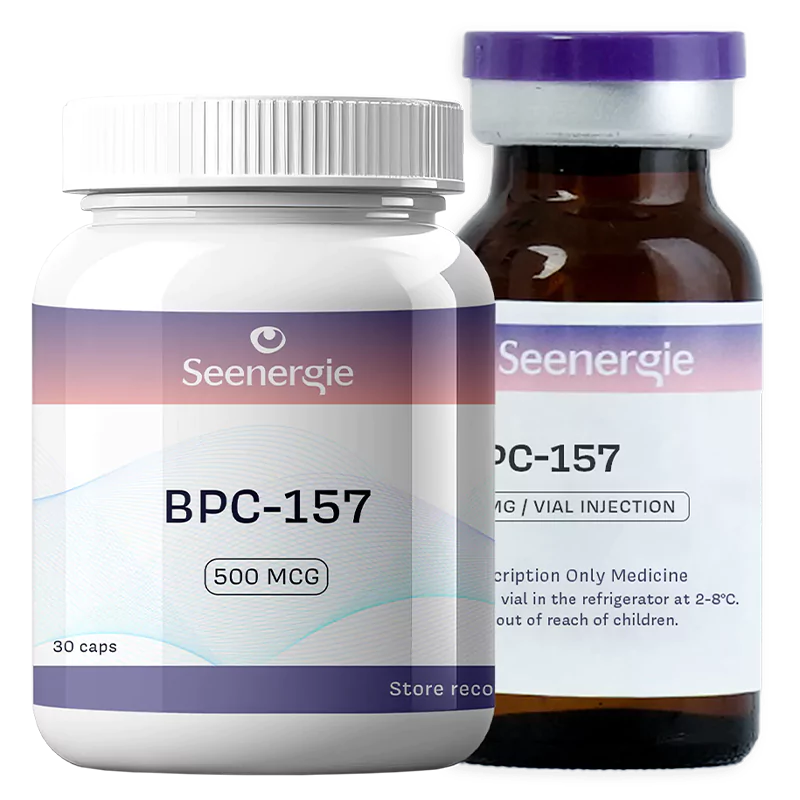
  • Provided as a 500mcg oral capsule

For Vial

  • Provided in 5mg and 25mg lyophilized vial

For Oral

  • Initiation: BPC-157 therapy is initiated to support tissue repair, reduce inflammation, and enhance overall recovery by promoting angiogenesis and modulating growth factors.
  • Initial Dose: Begin with 500 mcg (1 capsule) orally once daily for the first two weeks to assess tolerance and minimize potential side effects.
  • Titration: If well tolerated, increase the dose to 1,000 mcg (2 capsules) orally once daily after the initial two-week period.
  • Maintenance: Maintain the dose at 500-1,000 mcg (1-2 capsules) orally once daily for ongoing support in tissue repair and overall recovery.
  • Duration: BPC-157 is administered daily.
  • Weeks 1-2: 500 mcg (1 capsule) of BPC-157 once daily
  • Week 3 and onwards: 500-1,000 mcg (1-2 capsules) of BPC-157 once daily

* Provided as a standard protocol, dose may vary depending on the condition of the patient.
* The dosage of BPC-157 may be adjusted based on the individual’s response, medical history, and specific treatment goals.


For Vial (5mg/vial)

  • Initiation: BPC-157 therapy is initiated to support tissue repair, reduce inflammation, and enhance recovery.
  • Initial Dose: Begin with 0.5 mg (0.1 ml or 10 units) subcutaneously once daily (SCOD) for the first two weeks to assess tolerance and minimize potential side effects.
  • Titration:  If well tolerated, increase the dose to 1 mg (0.2 ml or 20 units) subcutaneously once daily (SCOD) after the initial two-week period.
  • Maintenance: Maintain the dose at 1 mg (0.2 ml or 20 units) subcutaneously once daily for ongoing support in tissue repair and overall recovery enhancement.
  • Duration: BPC-157 is administered once daily.
    • Weeks 1-2: 0.5 mg (0.1 ml or 10 units) of BPC-157 once daily
    • Week 3 and onwards: 1 mg (0.2 ml or 20 units) of BPC-157 once daily

* Provided as a standard protocol, dose may vary depending on the condition of the patient.
* The dosage of BPC-157 may be adjusted based on the individual’s response, medical history, and specific treatment goals.


  • Known hypersensitivity to BPC-157 or any component of the formulation.
  • Not recommended for use during pregnancy or breastfeeding unless specifically advised by a healthcare provider.
  • Individuals with cancer should avoid using BPC-157 due to its potential angiogenic properties, which might influence tumor growth.
  • Caution is advised for patients with a history of cardiovascular diseases, as BPC-157 may influence blood vessel formation and blood flow.
  • Patients with severe gastrointestinal conditions should consult with their healthcare provider before starting this treatment.
  • Avoid taking other supplements or medications that might interact with BPC-157 without professional advice.

  • Regular monitoring of tissue and recovery health to assess the effectiveness of the treatment.
  • Regular monitoring of inflammatory markers and overall health to assess the effectiveness of the treatment.
  • Periodic blood tests to check for any adverse effects and to adjust the treatment as necessary.
  • Periodic assessments to check for any adverse effects and to adjust the treatment as necessary.
  • Patients should stay informed about the evolving regulatory landscape and consult with healthcare professionals to ensure compliance with guidelines​.
  • Consultation with a healthcare professional before starting BPC-157 to ensure it is appropriate for the patient’s health condition.

Procedure

Reconstitution

  • Draw 1 ml of sterile water for injection into a syringe.
  • Inject the sterile water into a vial containing 5 mg of BPC-157 peptide.
  • Gently swirl the vial until the peptide is fully dissolved.

For Oral

  • Take 1-2 capsules (500-1,000 mcg) of BPC-157 orally once daily.
  • It is recommended to take the capsules with water and preferably at the same time each day to maintain consistent blood levels of the supplement.
  • Do not exceed the recommended dosage unless advised by a healthcare provider.

For Vial

  • Remove the cap from a tuberculin syringe.
  • Draw the reconstituted BPC-157 solution into the syringe to the required dosage (0.1 ml or 10 units initially, 0.2 ml or 20 units after titration).
  • Clean the selected injection site with an alcohol swab.
  • Pinch the sanitized skin and insert the needle at a 90-degree angle.
  • Administer the injection subcutaneously.

For Oral

  • Store the bottle of BPC-157 capsules in a cool, dry place away from direct sunlight.
  • Ensure the bottle is tightly sealed to maintain the integrity of the capsules.
  • Keep out of reach of children.
  • Monitor for any unusual symptoms and report them to a healthcare provider immediately.

For Vial

  • Store the remaining BPC-157 solution in the refrigerator at 2-8°C.
  • Before the next use, clean the vial top with an alcohol swab.
  • Use a new syringe for each administration.
  • Ensure to rotate injection sites (abdomen, thigh, or upper arm) to minimize skin irritation.)

Clinical Research

Study:

BPC-157 for Tissue Repair and Regeneration

Source:

Cell and Tissue Research, Biomedicines, Cochrane Handbook

Results:

BPC-157, a synthetic peptide derived from a protein found in human gastric juice, has demonstrated significant potential in promoting tissue repair and regeneration. The peptide has been extensively studied for its therapeutic benefits across various types of tissues, including muscles, tendons, ligaments, and gastrointestinal tract.

BPC-157 enhances the healing process by modulating various growth factors and signaling pathways involved in tissue repair. It promotes angiogenesis (formation of new blood vessels), enhances collagen production, and reduces inflammation. These actions collectively support tissue regeneration and accelerate the healing process​.

Cell and Tissue Research, 2018; Biomedicines, 2022; Cochrane Handbook, 2023.

Articles

The Stable Gastric Pentadecapeptide BPC 157 Pleiotropic Beneficial Activity and Its Possible Relations with Neurotransmitter Activity

We highlight the particular aspects of the stable gastric pentadecapeptide BPC 157 pleiotropic beneficial activity (not destroyed in human gastric juice, native and stable in human gastric juice, as a cytoprotection mediator holds a response specifically related to preventing or recovering damage as such) and its possible relations with neurotransmitter activity.

Why Dr. Piazza Believes In BPC 157 And Key Benefits

We offer this peptide as an oral supplement, you do not have to rely on a compound pharmacy to receive the injection fluid, and also significant cost savings versus procuring from a compound pharmacy. Some key benefits

Doctor's Reviews

My Experience with BPC-157 | Peptides That ENHANCE HEALING?

Stephanie Wolff shares her personal experience with using BPC-157 to heal injuries and how she uses it in her daily practise to help her patients that struggle with ED.

BPC157 Peptide – Miracle Agent? Doctor’s Analysis

BPC157 – “body protection compound 157” – is a peptide, or group of amino acids, found naturally in human gastric juice in small amounts. But it is being synthesized and used in greater amounts for its supposed systemic healing benefits.

What Science ACTUALLY Says About BPC 157

BPC 157, a synthetic peptide derived from stomach acid protein, holds potential in tissue regeneration, improving blood flow, and reducing inflammation, as demonstrated in animal studies. However, its effectiveness and safety in humans remain unproven due to the lack of rigorous clinical trials.