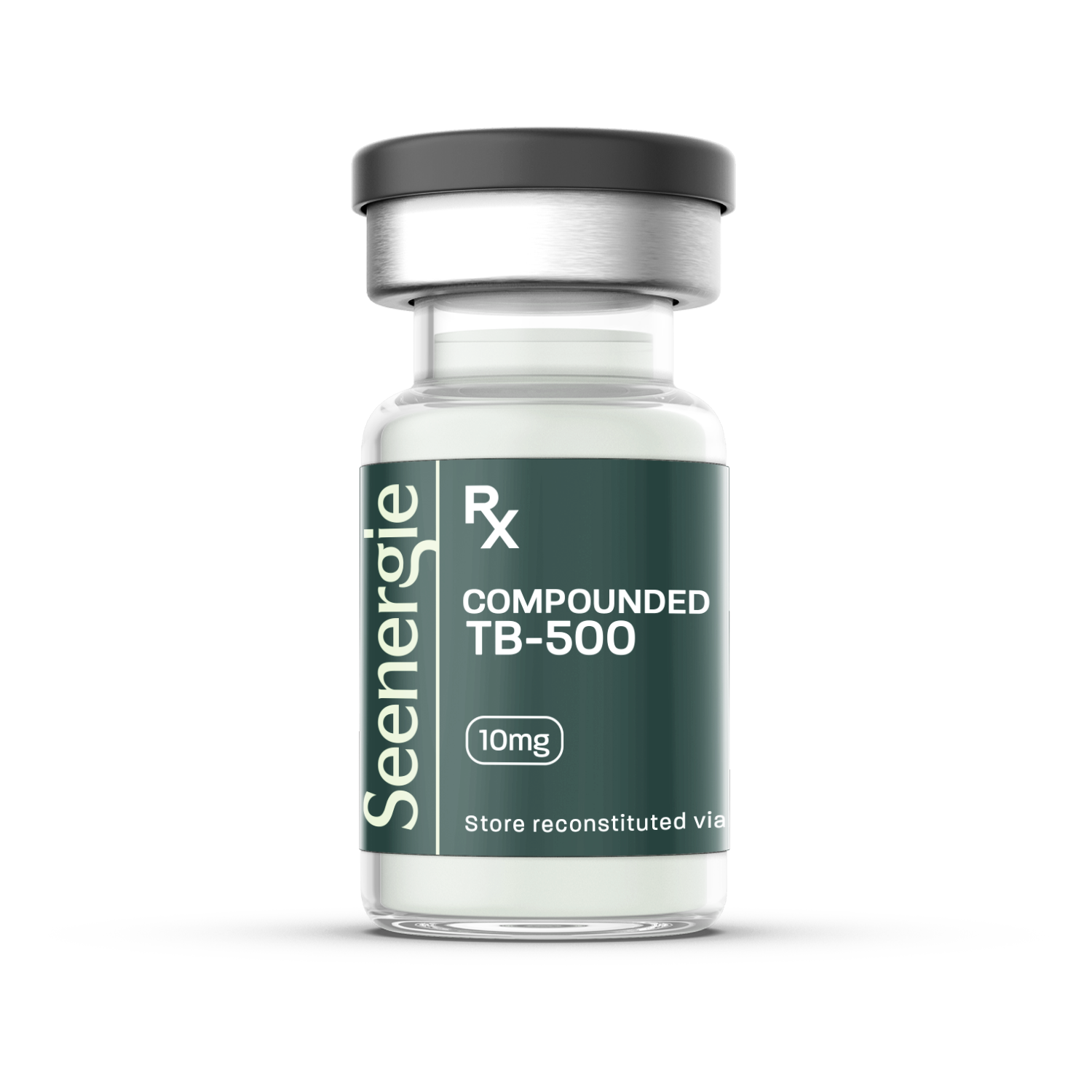
TB-500

Primarily used in regenerative and recovery-focused medical fields, TB-500 supports systemic tissue repair, modulates inflammation, and enhances recovery across muscles, tendons, ligaments, and soft tissue.

Active ingredient:

Synthetic peptide (Thymosin Beta-4 fragment)

Molecular formula:

C₃₈H₆₉N₁₃O₁₇

Molecular weight:

≈ 889 g/mol

Intake:

Injection

TB-500

Active ingredient:

Synthetic peptide (Thymosin Beta-4 fragment)

Molecular formula:

C₃₈H₆₉N₁₃O₁₇

Molecular weight:

≈ 889 g/mol

Intake:

Injection

What is

TB-500

TB-500 is a synthetic peptide derived from the active region of Thymosin Beta-4, a naturally occurring protein found throughout human tissues.

Unlike full-length TB-4, TB-500 is designed to mimic the most biologically active portion responsible for tissue repair and recovery. It plays a critical role in cell migration, angiogenesis, and inflammation modulation, making it particularly valuable for musculoskeletal and soft tissue regeneration.

TB-500 supports the body’s natural healing processes by helping repair cells move efficiently to injured areas, encouraging new blood vessel formation, and minimizing excessive scar tissue development. Because of its systemic activity, TB-500 is often used when recovery support is needed across multiple areas rather than a single localized injury.

Due to these properties, TB-500 has been widely studied in regenerative medicine and recovery-based protocols, especially for muscle, tendon, ligament, and joint support.

Benefits

  • Supports muscle, tendon, and ligament repair
  • Helps reduce inflammation in joints and soft tissue
  • Encourages faster recovery after physical strain or injury
  • Promotes formation of new blood vessels in damaged tissue
  • Helps minimize scar tissue and fibrous adhesions
  • Improves flexibility and tissue mobility
  • Supports overall endurance and recovery capacity
  • Enhances cellular migration and regeneration
  • Helps protect tissues from ongoing stress and micro-injuries

Protocols

Content and Potency

Provided as a 5mg and 10 mg lyophilized vial

5mg/vial: 

Initial Dose: Begin with 0.5 mg (0.2 ml or 20 units) subcutaneously once daily (SCOD) for the first two weeks to assess tolerance and minimize potential side effects.

Maintenance: Maintain the dose at 1 mg (0.4 ml or 40 units) subcutaneously once daily for ongoing support in tissue repair and overall recovery enhancement.

Duration: TB-500 is typically administered in cycles lasting 4–6 weeks, followed by reassessment.

  • Weeks 1–2: 0.5 mg (0.20ml or 20 units) of TB500 once daily.
  • Weeks 3–6: 1 mg (0.40ml or 40 units) of TB500 once daily.

10mg/vial:

Initial Dose: Begin with 0.5 mg (0.1 ml or 10 units) subcutaneously once daily (SCOD) for the first two weeks to assess tolerance and minimize potential side effects.

Maintenance: Maintain the dose at 1 mg (0.2 ml or 20 units) subcutaneously once daily for ongoing support in tissue repair and overall recovery enhancement.

Duration: TB-500 is typically administered in cycles lasting 4–6 weeks, followed by reassessment.

  • Weeks 1–2: 0.5 mg (0.10ml or 10 units) of TB500 once daily.
  • Weeks 3–6: 1 mg (0.20ml or 20 units) of TB500 once daily.

*Provided as a standard protocol. Dosage may vary depending on patient condition and treatment goals.
*Dosing of TB500 should be adjusted based on clinical response, medical history, and professional evaluation.

  • Known hypersensitivity to TB-500 or any component of the formulation
  • Not recommended during pregnancy or breastfeeding unless specifically advised by a healthcare provider

  • Regular assessment of recovery progress and tissue response
  • Ongoing clinical monitoring to evaluate effectiveness and tolerance

Procedure

Reconstitution

  1. Draw 2 ml of sterile water for injection into a syringe.
  2. Inject the sterile water into the vial containing 5mg or 10 mg of TB-500.
  3. Gently swirl the vial until the peptide is fully dissolved.

  1. Remove the cap from a tuberculin syringe.
  2. Draw the reconstituted TB-500 solution into the syringe according to the required dosage.
  3. Clean the selected injection site with an alcohol swab.
  4. Pinch the sanitized skin and insert the needle at a 90-degree angle.
  5. Administer the injection subcutaneously.

  1. Store the remaining TB-500 solution in the refrigerator at 2–8°C
  2. Clean the vial top with an alcohol swab before each use
  3. Use a new syringe for every administration
  4. Rotate injection sites (abdomen, thigh, or upper arm) to minimize irritation

Clinical Research

Study:

Thymosin Beta-4–Derived Peptides in Tissue Repair and Regeneration

Source:

Frontiers in Physiology, Journal of Molecular Medicine, Translational Research Reviews

Results:

Research on Thymosin Beta-4 and its active peptide fragments demonstrates significant roles in cell migration, angiogenesis, inflammation modulation, and tissue regeneration. These mechanisms support recovery in muscle, tendon, ligament, and soft tissue injuries by enhancing blood supply, reducing fibrosis, and improving tissue quality during healing.

TB-500, as an active fragment, is commonly referenced in regenerative research for its ability to accelerate repair processes without altering hormonal pathways, making it suitable for recovery-focused protocols.

Frontiers in Physiology, 2019; Journal of Molecular Medicine, 2021; Translational Research Reviews, 2023.