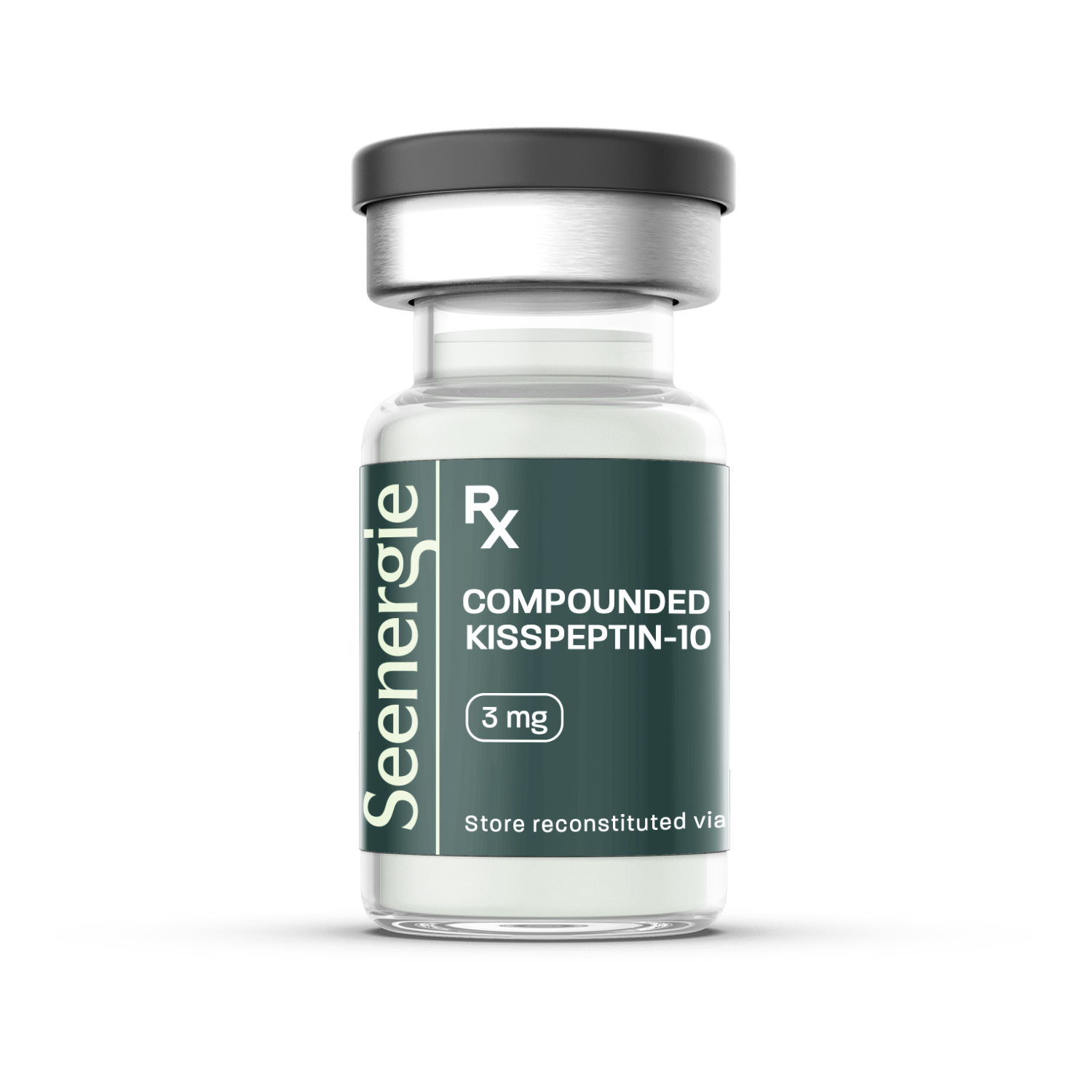
Kisspeptin

Kisspeptin is a reproductive-regulating neuropeptide that stimulates GnRH secretion, supporting fertility, healthy puberty onset, and hormonal balance in both men and women.

Active ingredient:

Kisspeptin-10 or Kisspeptin-54

Molecular formula:

C64H78N18O10

Molecular weight:

~1302.4 g/mol

Intake:

Injection

Kisspeptin

Active ingredient:

Kisspeptin-10 or Kisspeptin-54

Molecular formula:

C64H78N18O10

Molecular weight:

~1302.4 g/mol

Intake:

Injection

What is

Kisspeptin

Kisspeptin is an essential neuropeptide hormone that plays a critical role in reproductive health by activating the KISS1R (GPR54) receptor. This stimulation triggers the release of Gonadotropin-Releasing Hormone (GnRH) from the hypothalamus, which then drives the secretion of Luteinizing Hormone (LH) and Follicle-Stimulating Hormone (FSH) from the pituitary. These hormones are central to ovulation, oocyte maturation, and spermatogenesis.

Kisspeptin is indispensable for the initiation and maintenance of puberty and ongoing fertility. In clinical applications, it’s being explored for fertility enhancement protocols, assisted reproductive technologies (ART) such as in vitro fertilization (IVF), and the treatment of certain forms of infertility.

By modulating the hypothalamic-pituitary-gonadal (HPG) axis at its root, Kisspeptin offers a more physiologic approach to fertility restoration compared to direct hormone replacement.

Benefits

  • Stimulates natural GnRH release for optimal reproductive hormone function
  • Supports fertility in both men and women
  • Promotes oocyte maturation and ovulation
  • Enhances spermatogenesis and testicular function
  • May aid in cases of hypogonadotropic hypogonadism
  • Potential role in IVF protocols to improve egg quality and timing

Protocols

Content & Potency:

  • 3mg lyophilized vial


  • 100–200 mcg (0.10–0.20 ml or 10–20 units) subcutaneously once daily
  • Duration and protocol adjustments depend on fertility goals and medical supervision

Doses may vary depending on the individual’s condition, medical history, and treatment goals.

  • Not recommended during pregnancy unless under fertility specialist supervision
  • Contraindicated in patients with hormone-sensitive cancers
  • Should only be used under medical guidance, especially in fertility protocols

  • Baseline reproductive hormone profile before starting treatment
  • Monitoring of LH, FSH, estradiol/testosterone during therapy
  • For ART/IVF, dosing is coordinated with ovarian stimulation cycles

Procedure

Reconstitution

Add the prescribed amount of sterile water for injection to the vial and swirl gently until dissolved

Inject subcutaneously in the abdomen, thigh, or upper arm; rotate injection sites to prevent irritation

Refrigerate at 2–8°C; protect from light; do not freeze

Clinical Research

Study:

Source:

Results:

  • Kisspeptin has been shown to trigger LH and FSH surges comparable to natural cycles in women undergoing IVF
  • In men, it may improve spermatogenesis and testosterone levels in hypogonadotropic hypogonadism
  • Early studies suggest Kisspeptin is well tolerated with minimal desensitization risk compared to chronic GnRH analog use

Read More: